Aldose Reductase Inhibitors & Diabetic Neuropathy
Polyol Pathway, Epalrestat and Pathogenesis-Oriented Treatment of Diabetic Peripheral Neuropathy
Past RGUHS · 2
RGUHSDec '23
RGUHSJul '23
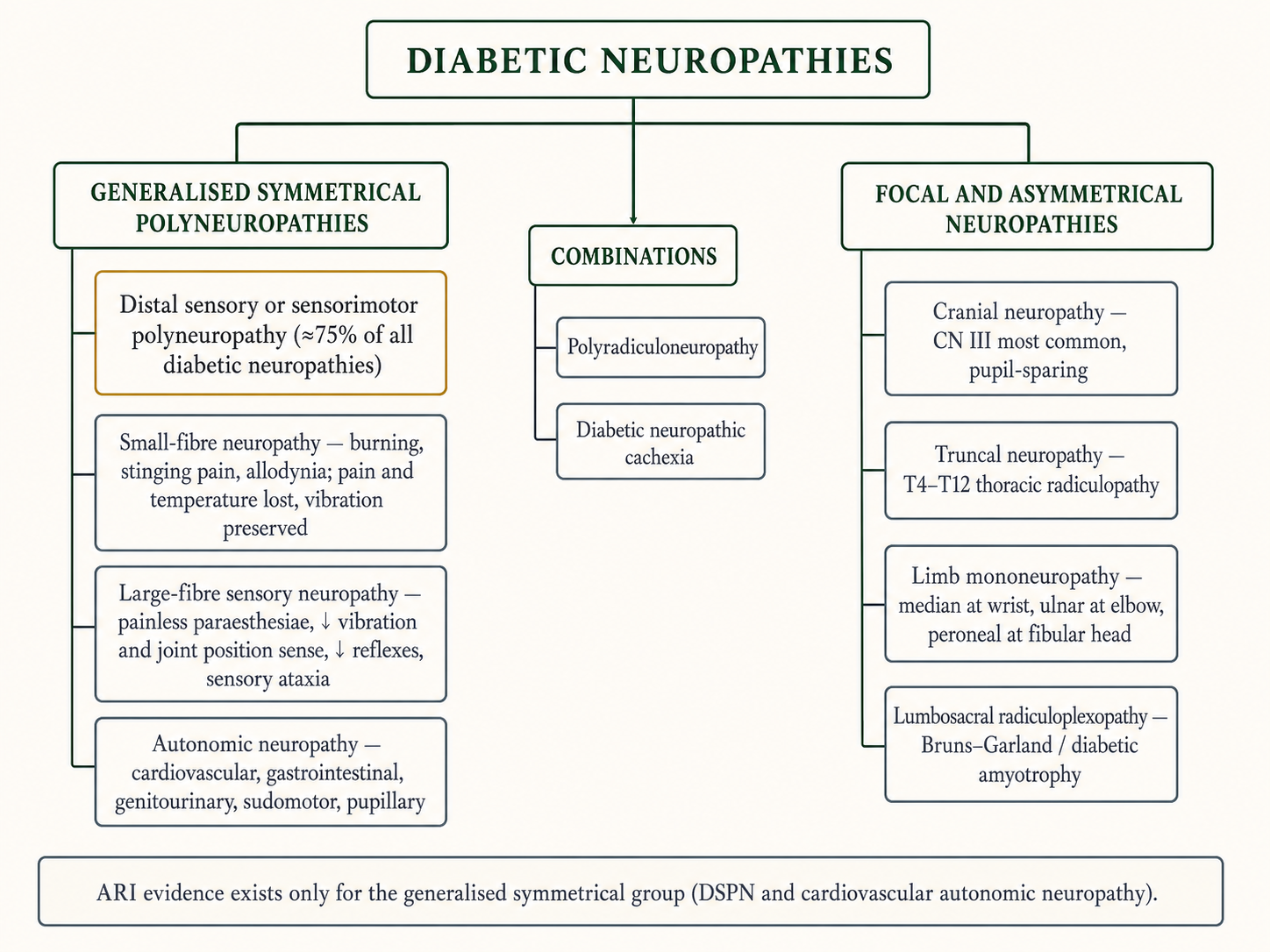
Introduction and classification of the neuropathies of diabetes
- One-line answer — Epalrestat is an orally active, reversible, non-competitive, selective inhibitor of aldose reductase (AR, AKR1B1) — the rate-limiting first enzyme of the polyol pathway — given as 50 mg three times daily before meals as a pathogenesis-oriented (disease-modifying) rather than symptom-suppressing treatment of diabetic peripheral neuropathy (DPN). [PMID 37971280]
- Burden — Diabetes is the leading cause of peripheral polyneuropathy; neuropathy occurs in about 50% of long-standing type 1 and type 2 diabetes; distal symmetrical polyneuropathy (DSPN) is roughly three-fourths of all diabetic neuropathies, and up to half of those affected have no symptoms — so screening, not history-taking, is the case-finding tool.
- The defining contrast — Every other drug used in painful DPN — pregabalin, gabapentin, duloxetine, amitriptyline, capsaicin — treats the symptom; epalrestat targets the lesion. Symptomatic analgesic monotherapy relieves pain without touching the underlying neuropathy, has limited efficacy and carries adverse events: the stated unmet need that pathogenesis-oriented agents exist to fill. [PMID 38245327]
- The class is a graveyard — Aldose reductase inhibitors (ARIs) "when first introduced were proclaimed to be major advances … [but] have never produced the expected results", and problems with efficacy and toxicity "relegated most of this class of agents to historical interest". Epalrestat is the only aldose reductase inhibitor approved for human use. [PMID 8329799] [PMID 31636082]
- Set the evidence register first — KDT: epalrestat "has caused modest improvement in nerve conduction, neuropathic pain and other symptoms" but "magnitude of benefit and safety are yet to be defined". Bradley is blunter — ARI trials "have so far failed to produce convincing clinical improvement or proved toxic, though there were modest changes in nerve conduction and nerve pathology".
Continue reading
See plans
Aldose Reductase Inhibitors Diabetic Neuropathy
PharmaNotes Pro · LAQ
₹199/monthMonthly
Save 16%₹1,999/yearAnnual
- Every LAQ and Comprehensive chapter, current and future
- Exam Prep: guided recall, recorded audio and nine PDFs
- The RGUHS recurring-question answer bank, Papers I–IV
Sign in with your Google account. If you're already subscribed, the chapter unlocks immediately — otherwise, pick Monthly or Annual on the next step.